A look to the future

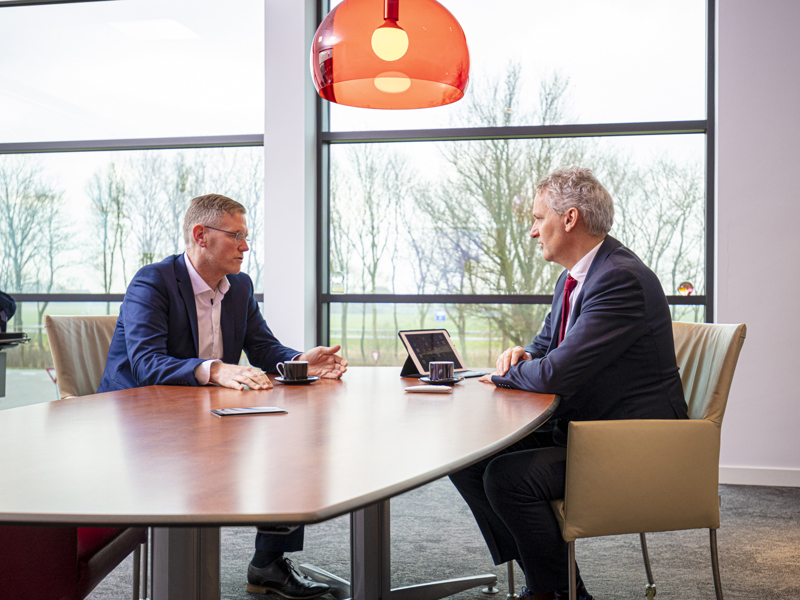
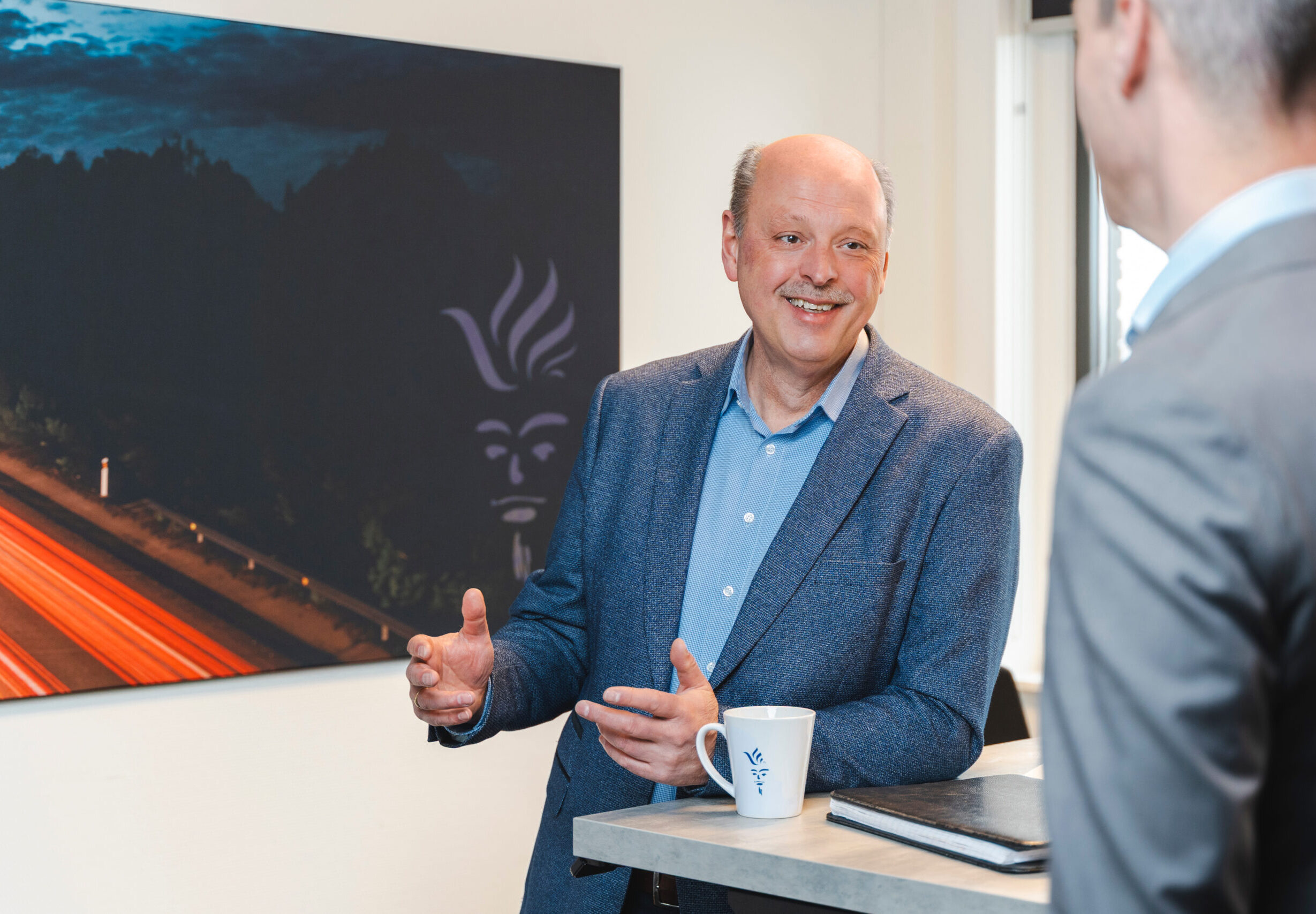
Fritom celebrated exactly 50 years in 2021, a festive milestone! During our anniversary year we looked back on 50 years full of successful collaborations, growth, goodbyes and new initiatives. In conversation with Wessel R. Veenstra, director of Fritom Holding and general manager of Veenstra|Fritom and Arnold de Jong, chairman of the board of Fritom Holding, we looked to the future during this anniversary year. Among other things, we talked about trends and developments in the industry and made cautious predictions for the next 50 years.

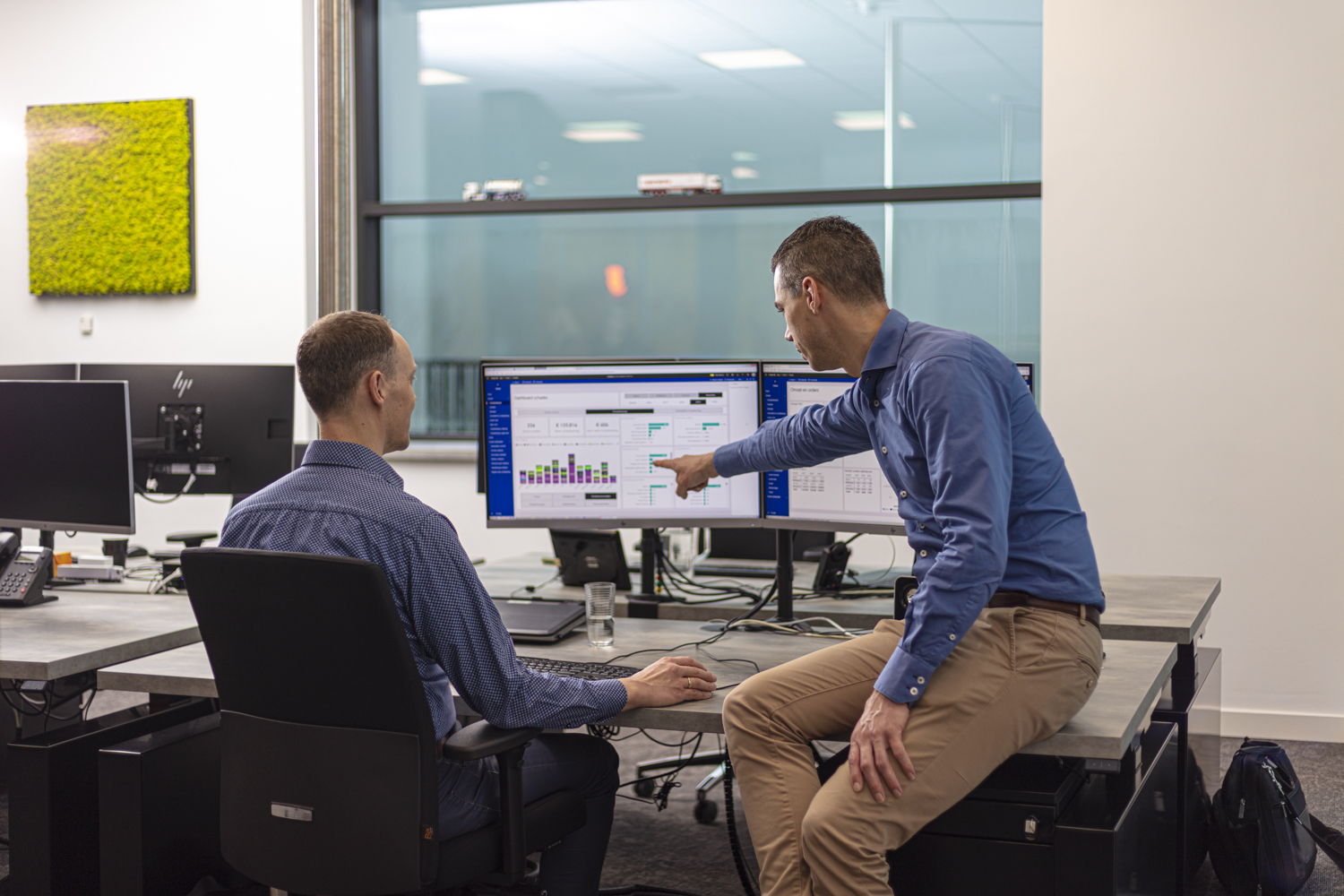
Fritom has been betting heavily on ICT issues for 10 years. Digitalization is an important spearhead for the coming years. With its own ICT department, Fritom is not making itself completely dependent on external parties. "With the help of data, we want to optimize business operations to make it easier to cooperate both within and outside the group," said Wessel. "But giving a picture of what our sector will look like in 50 years? That's actually impossible to do. You could, so to speak, talk about that for 14 days."

In an adaptive way, Fritom is close to the latest developments. For example, it is studying electric trucks at the front end. "This is an energy supply that is still in its infancy now, there are other issues involved. Very soon we will have to deal with CO2 pricing. You see accelerated movement in that and we are investing in that as well. Think of LNG vehicles running on green gas. Meanwhile, this has already been developed to the point that if you deploy this well, there is a normal business model in it despite the investment."
Ultimately, according to Wessel, there is no single solution to the energy issue; it will be a mix of solutions: "I think if you look five years ahead there will be a lot of regional distribution vehicles driving fully electric. Our fuel suppliers are profiling themselves more and more as energy suppliers. They are investing in battery technology, for when the government cannot lay a heavy enough network in the future. It just has to be affordable. Legislation will also play a role in this, but we at least want to be at the front of that train." Arnold: "Logistics is a matter of dimes and quarters. Very often we then also look at whether it gives us additional returns again." Wessel: "Ultimately, it has to translate into what someone pays at the checkout. It has to remain workable and affordable throughout the supply chain. There's a lot in between."

Arnold: "We sit around talking a lot about vistas, when we already know that the infrastructure that needs to be built for that and the people to do it simply aren't there yet. That is why at Fritom we are looking at what we can do in the meantime. In our industry, the challenge is to make sure the trucks leave as full as possible. That's nice at the bottom of the line in terms of margins, but also much more environmentally sensible." He continues: "We drive the latest vehicles, there is already a huge fuel economy in that. When our truck is in Amsterdam, it emits cleaner air than goes in. So much has already been done in that. Unfortunately, that's not always seen." Wessel: "One thing is certain, we have to reduce our CO2 footprint. Left or right. The big challenge is reality and complexity, to have and keep understanding for each other."

On the other hand, we also see the optimization of logistics chains. Wessel: "You see in recent years, just apart from Corona, the optimization of that chain. Physical handling at wholesalers is disappearing. Physical distribution is increasingly going directly to the end user. Corona has accelerated certain things, but we saw this trend before. Just purely from optimization in the chain. And how can you optimize such a chain properly? By continuing to focus on the digitization of processes. And we see that as a huge opportunity. "Arnold: "All those chains are connected worldwide, which is quite vulnerable. Whether it will last I don't know, but people are increasingly looking to stock up closer to home. We have those warehouses, which is an opportunity for us. You can also see at the moment that everything is bulging and that also causes a counter-reaction, that more construction is also needed."

Being a good employer is a high priority at Fritom. Arnold: "We are close to the industry association to, on the one hand, see what is happening in our sector and, on the other hand, to be able to influence it." Wessel: "The unions do good work. Not only for individual members but also for the sector." Fritom wants the industry to remain attractive and for people to be able to earn a good living in it. Arnold: "At the time, we were one of the first to drive with an automatic transmission and air conditioning. That will increase in the future. For example: how can we arrange it so that our drivers make longer trips with fewer stops, so that they are not just loading and unloading?"

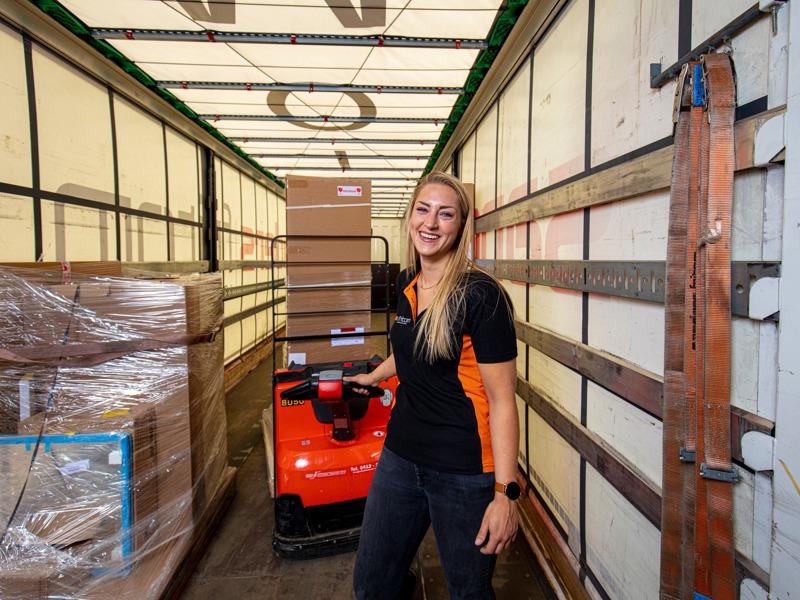
In addition, automation continues to evolve. But can the work be done without staff? No, Arnold thinks. "Certainly not with us, where we are in special goods. A robot can do a lot where it is standard, but where it deviates, it is much more difficult for a robot." Technology allows for a lot. Only, our legislation is not ready for today's rapid technological developments. After all, if the driver does not feel like a driver, who is responsible if something goes wrong? Still, you shouldn't mistake this, Arnold believes: "They are now working on bringing medicine to the Wadden Islands with a drone. A few years ago I would have thought: That's still a long way off. But it is developing rapidly. That's why we don't quickly reason ten years ahead. Because before you know it, you get stuck in tunnel vision." Wessel: "We like to be at the forefront of these developments, to be able to deal with all these changes in an agile way. So that the continuity of the companies is not only guaranteed in the future, but also during the journey towards it."

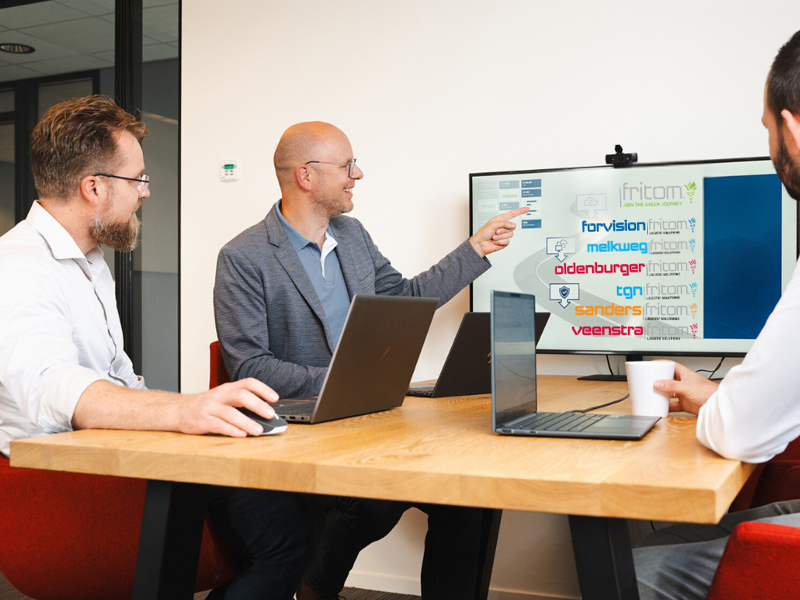
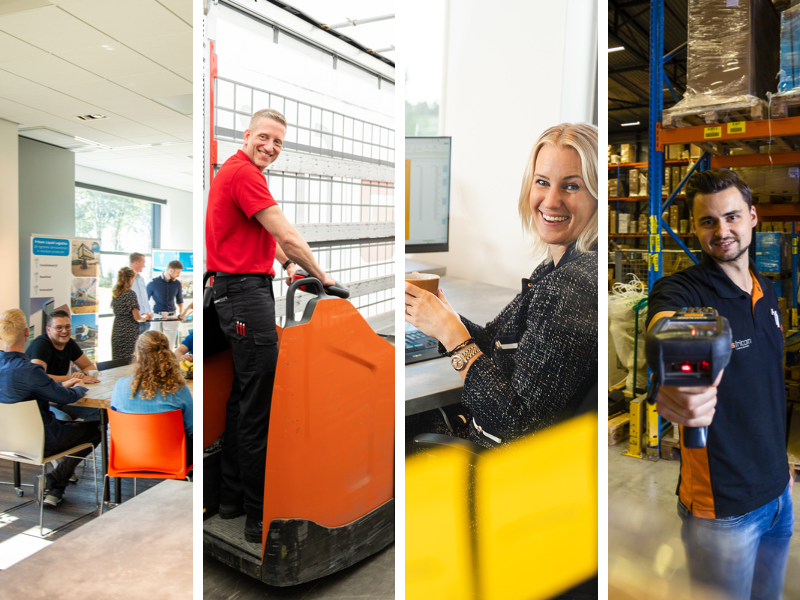
A good example is Melkweg|Fritom. This Fritom company jumped on top of the Brexit in late 2020/early 2021 and as a result is one of the few parties transporting milk from England to the Netherlands. Arnold: "This shows the flexibility and craftsmanship of our people." Wessel: "On the outside we look like a group of seven companies, but we work closely together. Not only in the exchange of goods, but also in the exchange of knowledge." Arnold: "This is also the strength of our company, there is so much craftsmanship and entrepreneurship here that we seize opportunities time and again."

There have been many collaborations in the past. At Fritom they do not have the intention to become the biggest, but the intention to be the best. Wessel: "A smart economic principle entails that in order to control costs, you have to grow. It does have a limit of course, but yes, we do look at growth." Arnold: "What I have always found the strength of Fritom is that this continuity and responsibility is also felt by employees, shareholders and stakeholders. There is a lot of emotion in Fritom. That can be about colors or names, but ultimately decisions are made and we are always looking at the next generations. Is there room for other companies to join in the future? The past has shown that there are opportunities there, the future will be no different."

Looking 10 years ahead is virtually impossible, but what sets Fritom apart is flexibility. Arnold: "If you want to achieve everything in the short term, then you know one thing for sure, you can achieve fantastic results in a short period of time, but the chances are quite high that in five years you no longer exist or look completely different. It's about balance."

If we were allowed to speculate about the future, what would Fritom look like in 50 years? Arnold: "I think that in 50 years this structure can still exist. Craftsmanship, being close to the customers, understanding the customer well and also moving up in that. I firmly believe that our model will still be standing in the future. And there will sometimes be a company that has a downturn, but the beauty of our group is that we can support each other. Together you get further than alone."

Wessel: "For me, people will always remain important. No matter how complicated and how digitized it is. If we then use drones to deliver medicine to the Wadden Islands, yes we will. You can have a hundred drones flying overhead, but there have to be people who come up with it." Arnold: "Continuing that line, I think in 50 years it will be questionable whether we will still have trucks, for example. You can see that with the increasing demand it's getting more and more jammed. Once the CO2 emissions problem is solved soon, people are going to be bothered by all those electric vehicles. We're going to have more and more friction between the space that's left and the well-being we want from it. That means there are going to have to be other solutions. The airspace is still empty, so that's where I think the focus is going to be."

Fritom has some timeless universal values that can be applied to the challenges ahead. Arnold: "In addition, you have to remain open to the latest developments. That is what we have done for the past 50 years and ultimately that remains our strength."